
Warmer winters
Ceiling batts slow the rise of warm air out through the roof space, which is the biggest source of winter heat loss in most Coburg homes. Keeping heat inside reduces the need for heating and lowers energy costs.
Ceilings, Walls & Floors
Bulk insulation traps still air to slow heat flow through your Coburg home. We install glasswool, polyester and rockwool batts in ceilings, walls and under floors to cut winter heat loss and summer heat gain.
Share your details and Expert Insulation Melbourne will contact you about Bulk Insulation in Coburg.
Bulk insulation uses dense batts of glasswool, polyester or rockwool to resist heat flow by trapping still air. In Coburg’s older brick and weatherboard homes, it is most often fitted between ceiling joists in the roof space, inside wall cavities during renovations, or between floor joists from the subfloor. The higher the R-value, the greater the thermal resistance.
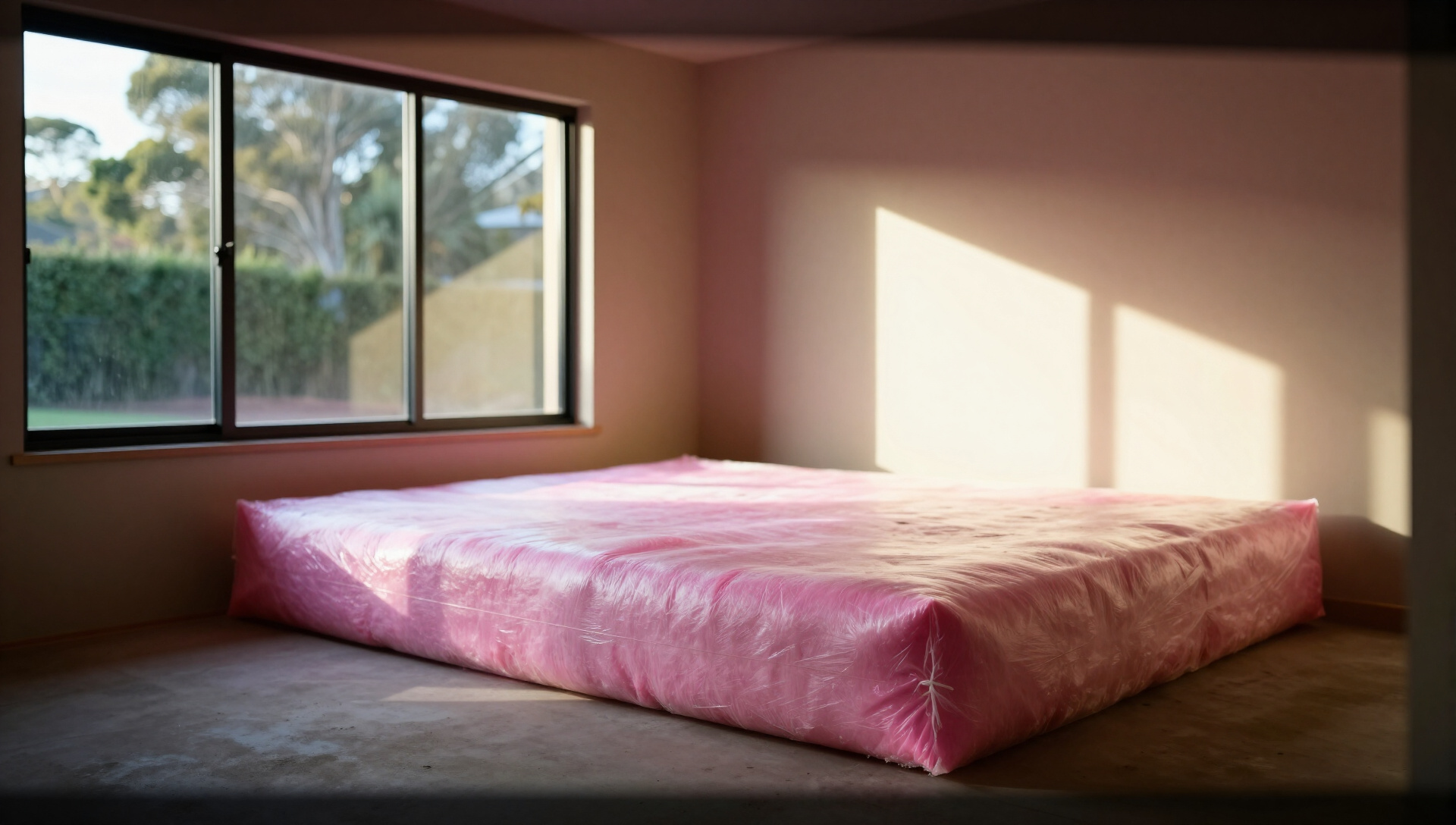
Coburg’s mix of interwar bungalows, postwar brick homes and newer units often lack sufficient insulation. Bulk batts address the main paths of heat transfer through ceilings, walls and floors, making a noticeable difference to comfort and energy bills.
Ceiling batts slow the rise of warm air out through the roof space, which is the biggest source of winter heat loss in most Coburg homes. Keeping heat inside reduces the need for heating and lowers energy costs.
Dense batts in ceilings and walls block radiant heat from entering the living space, helping your home stay cooler during Melbourne’s hot summers without overworking air conditioning.
Bulk insulation also dampens airborne noise between rooms and from outside, and when combined with sealing gaps, it cuts draughts that make rooms feel colder than they are.
Quality batts maintain their thickness and R-value over time if kept dry. In ceilings, they are protected from compression, while wall and underfloor batts stay in place once correctly fitted.
Whether your home is a single-storey brick veneer, a weatherboard cottage or a modern unit, bulk insulation can be added to ceilings and, where accessible, to walls and floors.
Bulk batts can be paired with reflective foil sarking under the roof or sisalation behind wall cladding to further improve thermal performance and manage moisture.
Installing bulk insulation is straightforward when access is good. We measure the spaces, choose the right R-value for your needs, and fit the batts without gaps or compression to ensure full coverage.
We check the roof space for existing insulation, wiring, downlights and any signs of moisture or pests. We measure the area between ceiling joists to determine the number of batts and the best R-value for your budget and climate needs.
For ceilings, R4.0 to R6.0 is common in Coburg to balance cost and performance. Walls typically use R2.0 to R2.7 batts, while underfloor applications often use R1.5 to R2.5. We discuss glasswool, polyester and rockwool options based on your preferences.
Batts are cut to size and friction-fitted between ceiling joists, wall studs or floor joists. We maintain clearances around downlights, flues and electrical cables, and ensure no gaps that would reduce performance.
We remove all offcuts and packaging, and vacuum any loose dust from the roof space. A final inspection ensures batts are snug, with no compression or gaps, and that access hatches are properly sealed.
Coburg’s housing stock includes many older homes with little or no insulation. Adding bulk batts to ceilings is the most effective upgrade for most properties, while wall and underfloor insulation can further improve comfort in brick veneer and weatherboard homes. Nearby suburbs like Brunswick and Pascoe Vale share similar needs, with many residents upgrading insulation to cope with Melbourne’s temperature swings.
We install glasswool, polyester and rockwool batts in Coburg ceilings, walls and floors to cut energy costs and improve comfort.
Homeowners in Coburg often ask about the best R-value, whether existing batts need removal, and how long installation takes. Here are the answers to common questions.
Bulk insulation in Coburg reduces heat transfer through ceilings, walls and floors by trapping still air within dense batts. In Melbourne’s climate, this means less winter heat loss through uninsulated roof spaces and less summer heat gain through walls and ceilings exposed to the sun. For Coburg homes, ceiling insulation is the priority, followed by walls and underfloor where access allows.
The most common bulk insulation materials are glasswool, polyester and rockwool. Glasswool offers excellent thermal performance and is widely used in ceilings and walls. Polyester is non-itch and often preferred for DIY or where skin sensitivity is a concern. Rockwool provides high fire resistance and acoustic benefits, making it a good choice for internal walls and between floors.
Cost depends on the area to be insulated, the chosen R-value, and access. Roof spaces with good access and standard joist spacing are quicker to insulate than those with limited access or many obstructions. If old batts are compressed, wet or damaged, removal may be needed before new insulation is fitted. We provide a clear quote after inspecting your Coburg property.
Improve your home’s thermal performance with bulk insulation fitted by Expert Insulation Melbourne. We work across Coburg and surrounding suburbs, using quality batts to cut energy costs and increase comfort.